

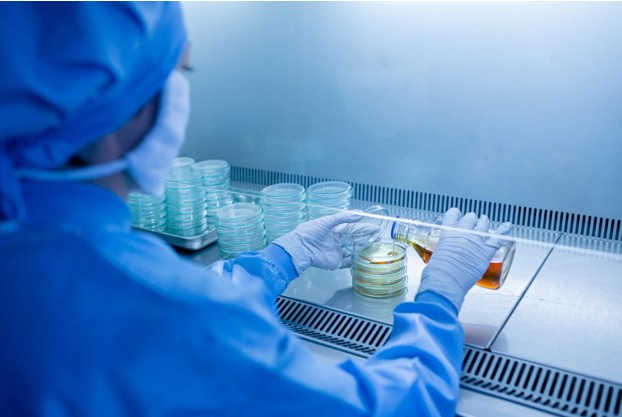
In laboratories around the world, many of the most important scientific discoveries depend on processes that are rarely discussed outside technical circles, yet they are absolutely essential for accuracy and consistency. Buffer preparation is one such process, forming the backbone of countless experiments in biology, chemistry, and pharmaceutical research.
While exploring trends in this field, I came across an insightful industry perspective that highlighted how critical and rapidly growing this area has become. It noted that the global buffer preparation market, valued at USD 8.48 billion in 2025, is projected to reach USD 9.18 billion in 2026 and USD 17.96 billion by 2035, with a 7.7 percent CAGR during the forecast period from 2026 to 2035. This growth reflects the increasing demand for precision and reliability in scientific and industrial applications.
Buffer preparation refers to the process of creating solutions that maintain a stable pH environment, which is crucial for many biochemical and chemical reactions. In simple terms, buffers resist changes in pH when small amounts of acids or bases are added, ensuring that reactions occur under controlled and predictable conditions. This stability is essential because even slight variations in pH can significantly alter the behavior of enzymes, proteins, and other biological molecules, potentially leading to inaccurate results or failed experiments.
The importance of buffer preparation becomes especially clear in fields such as molecular biology and biopharmaceutical manufacturing, where precision is not just desirable but absolutely necessary. Enzymatic reactions, for example, are highly sensitive to pH changes, and maintaining the correct environment is critical for ensuring that these reactions proceed efficiently. Similarly, in protein purification and drug formulation processes, buffers play a key role in maintaining the structural integrity and functionality of biological molecules, which directly impacts the quality of the final product.
Preparing a buffer solution may appear straightforward at first glance, but in practice it requires careful attention to detail and a thorough understanding of chemical principles. The process typically involves selecting an appropriate buffering system, calculating the required concentrations of its components, and adjusting the pH to the desired level using acids or bases. Factors such as temperature, ionic strength, and the presence of other substances must also be considered, as they can influence the effectiveness of the buffer. Even small errors in preparation can lead to significant deviations in experimental outcomes, highlighting the need for precision and consistency.
In modern laboratories, advancements in technology are transforming how buffers are prepared and managed, making the process more efficient and reliable. Automated systems are increasingly being used to prepare buffer solutions with high accuracy, reducing the risk of human error and improving reproducibility across experiments. These systems can precisely measure and mix components, monitor pH levels in real time, and adjust conditions as needed, ensuring that each batch of buffer meets the required specifications. This level of control is particularly valuable in large-scale manufacturing environments, where consistency across batches is critical.
Another important development in buffer preparation is the use of preformulated and ready to use buffer solutions, which simplify workflows and save time in busy laboratory settings. These solutions are prepared under controlled conditions and undergo rigorous quality checks, allowing researchers to focus on their experiments rather than spending time on routine preparation tasks. However, even with these advancements, understanding the underlying principles of buffer preparation remains essential, as it enables scientists to troubleshoot issues and adapt solutions to specific experimental needs.
Accuracy and reliability are especially important in buffer preparation because of the potential impact on research outcomes and product quality. In scientific and healthcare related fields, where results can influence critical decisions, maintaining high standards of precision and trust is essential. This is why laboratories often follow strict protocols and quality control measures when preparing buffers, ensuring that every solution meets the required specifications and performs as expected.
Beyond the laboratory, buffer preparation also plays a significant role in industrial applications, including food processing, environmental testing, and chemical manufacturing. In each of these areas, maintaining stable pH conditions is essential for ensuring product quality, safety, and compliance with regulatory standards. As industries continue to adopt more advanced technologies and processes, the demand for reliable buffer preparation methods is expected to grow further.
Final Thoughts:
In conclusion, buffer preparation may not always receive the attention it deserves, but it is a fundamental process that supports the accuracy and reliability of scientific work across a wide range of disciplines. Its importance lies not only in maintaining stable conditions for experiments but also in enabling consistent and reproducible results that can be trusted. As technology continues to advance and the demand for precision increases, buffer preparation will remain a critical component of both research and industrial processes, quietly supporting the innovations that shape our understanding of the world.